Use your keyboard's arrow keys to navigate
Watch an introduction to Miro
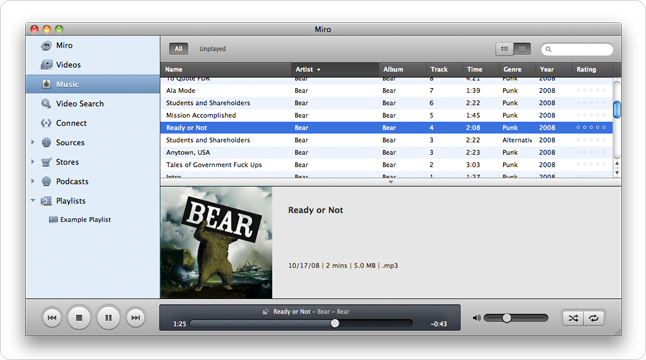
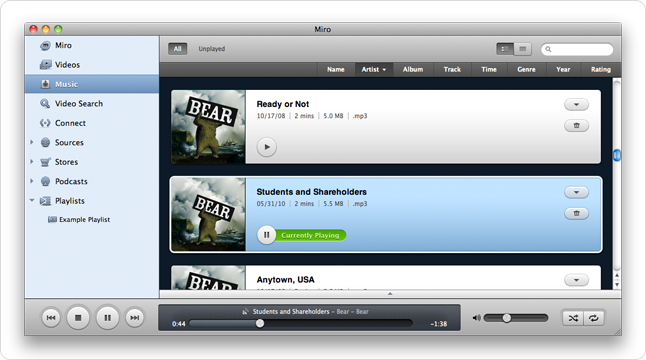
Works with your current music library
It's very easy to switch from iTunes to Miro -- without any copying. Just point Miro to your music and video folders and those files will appear. If you don't like Miro (impossible!), nothing's changed.
30 Second Video
30 Second Video
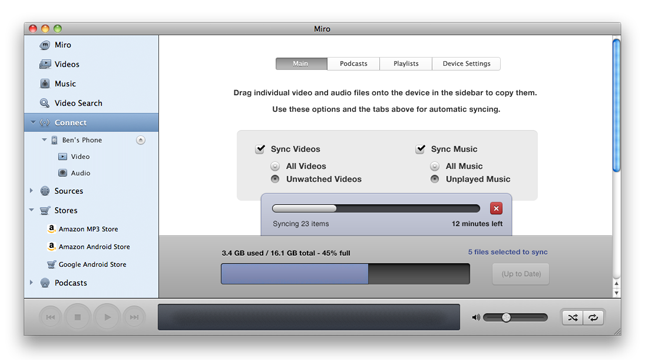
Converts and syncs to Android & Kindle Fire
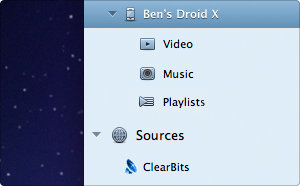
You'd have to be crazy to use a music player that doesn't sync to your phone. Miro is simply the best music and video player for Android phones and tablets.
30 Second Video
30 Second Video
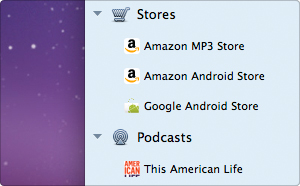
Buy Music and Apps inside Miro
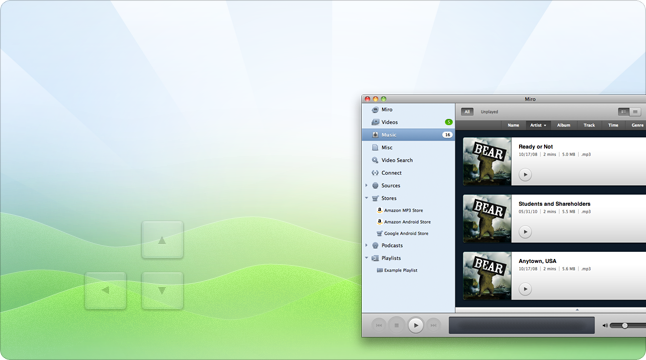
The Amazon MP3 store is built-in to Miro. Buy, download, and listen, seamlessly. Buy Android apps from the Amazon or Google app stores and they will sync to your device.
30 Second Video
30 Second Video
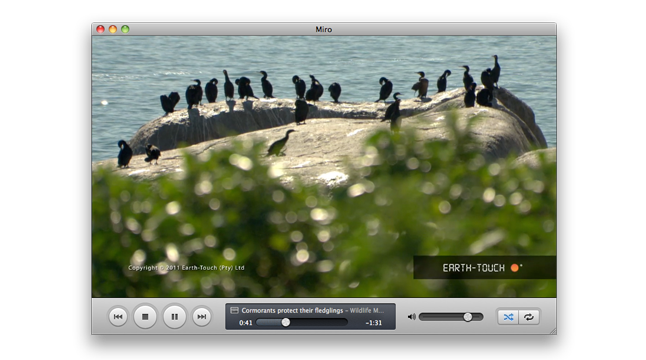
Download and play almost any video
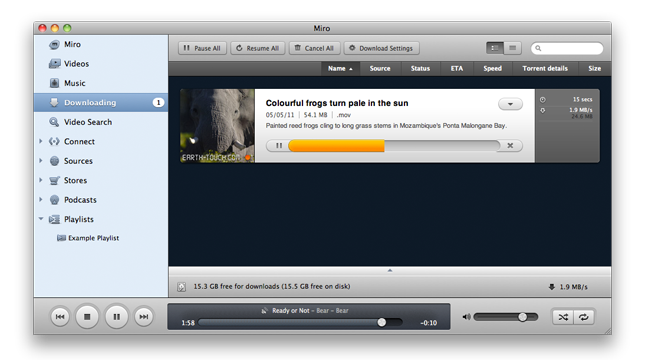
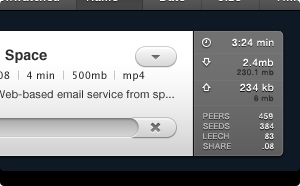
Do you still use separate programs to download, play music, play videos, and sync to your phone? Miro plays almost any video or music format and downloads from YouTube, podcasts, Amazon, and bittorrent.
30 Second Video
30 Second Video
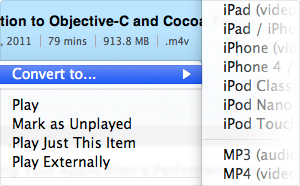
Convert any video
You can convert almost any video with Miro into mp4/h264, with presets for almost any device you can think of (including iPhones, iPods, iPads, Android phones, and more).
30 Second Video
30 Second Video
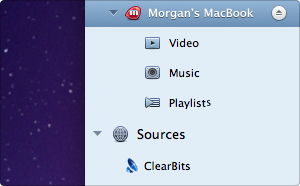
Share Your Media on your Network
When two Miro's are on the same wifi network, they can stream and transfer music and videos to each other. It's the easiest way to watch a video or play music upstairs if the file is downstairs.
30 Second Video
30 Second Video
Open-source - don't lock yourself in!
Unlike some other media players (cough, cough), Miro is not trying to run your life! Not only is Miro 100% free and open-source, it's made by a non-profit organization. You don't need to be locked down by one corporation to have a great media experience.
30 Second Video
30 Second Video
Ultra-fast torrent downloading
Miro has some of the fastest bittorrent downloading in the world, built in. Try us head-to-head with any bittorrent application!
30 Second Video
30 Second Video
But it's not about the features!
Miro has a lot of features, but that's not what matters-- it's the experience. Miro is a simple, beautiful, unified way to download, organize, and watch videos and listen to music. And it's totally free.
30 Second Video
30 Second Video
Miro Community
The easiest way to make a beautiful video website for any topic, organization, school, or community.
Amara
Increase your viewership by subtitling, captioning, or translating any video, with the help of your viewers.
Miro for iPad
Stream, transfer, and play videos and music from Miro to your iPad with our beautiful and free iPad app.